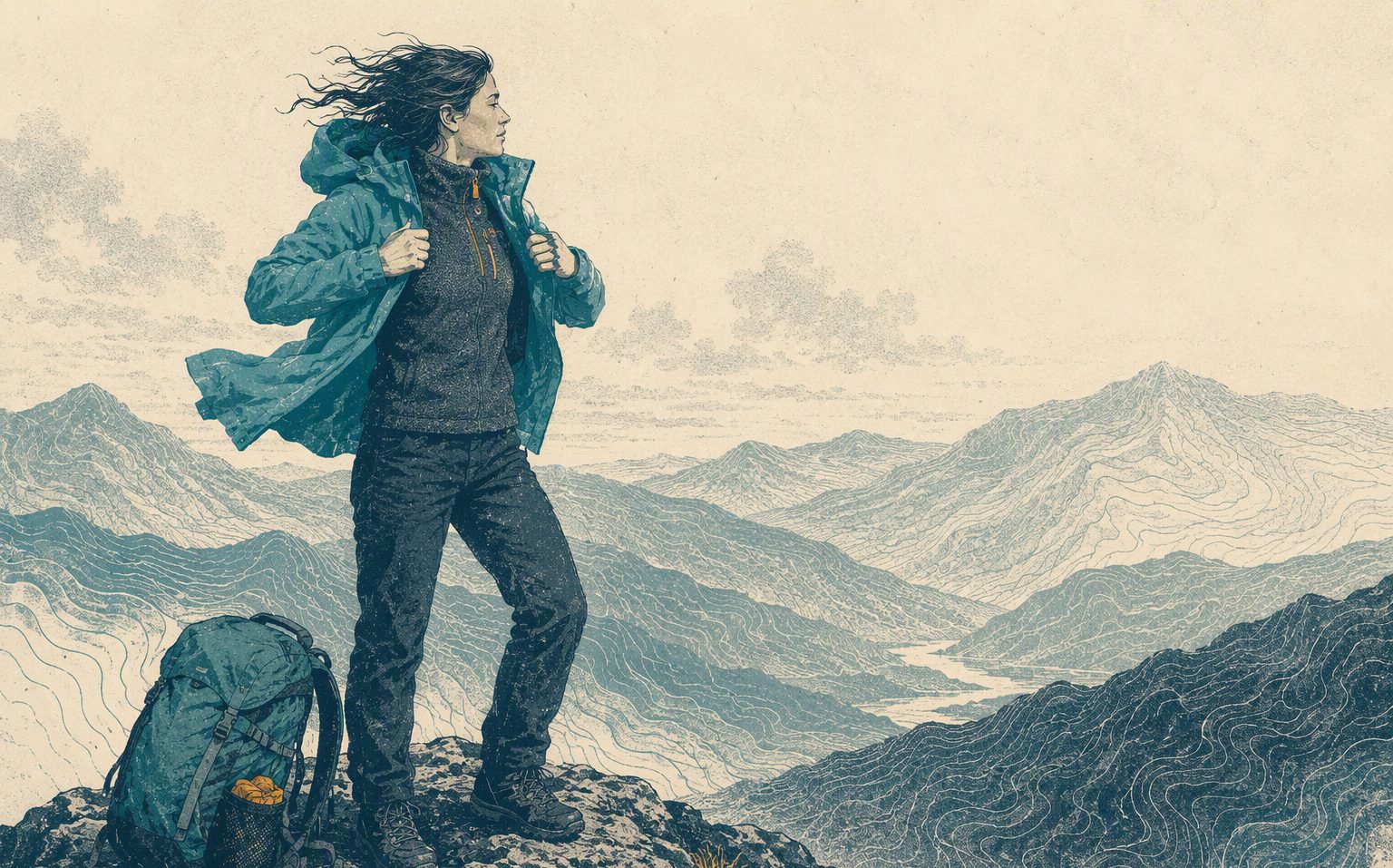
Field brief — the short answer
Bring layers for changing conditions, then add or remove them as your effort and the weather change. [2]
Build for the forecast and the stop
Pack wet-weather protection and clothing appropriate for the conditions. [1]
A base layer manages moisture, a midlayer retains warmth, and a shell manages wind and precipitation. [2]
Carry the system you will use
Use an insulating middle layer for warmth, with a shell layer for wind or rain protection. [2]
Adjust layers as effort and conditions change instead of treating one garment as the answer for the entire hike. [2]
Where to compare
Retailer options with a clear use case.
Affiliate disclosure. We may earn a commission if a retailer link becomes an approved affiliate link. That never changes the editorial criteria on this page.
Retailer option
Lightweight base layer
High-output starts in cool weatherSee retailer optionsRetailer option
Breathable wind layer
Ridges, breaks, and exposed trailSee retailer optionsSources
Verified July 20, 2026
- Day Hike Preparation — U.S. National Park Service; accessed 2026-07-29
- Layering Basics — REI Co-op; accessed 2026-07-29
Common questions
Common questions
The details people ask before they go.
Who is this hiking guide for?
It is for readers who want to make a clear hiking decision before a real outing, not collect gear for its own sake.
What should I check before I buy?
Match the option to the conditions, trip duration, fit, and the other items it must work alongside. Read a retailer's current specifications before purchasing.
Are the retailer links recommendations?
They are starting points for comparing current options. We do not claim testing, price, or stock information we cannot verify.
Related notes