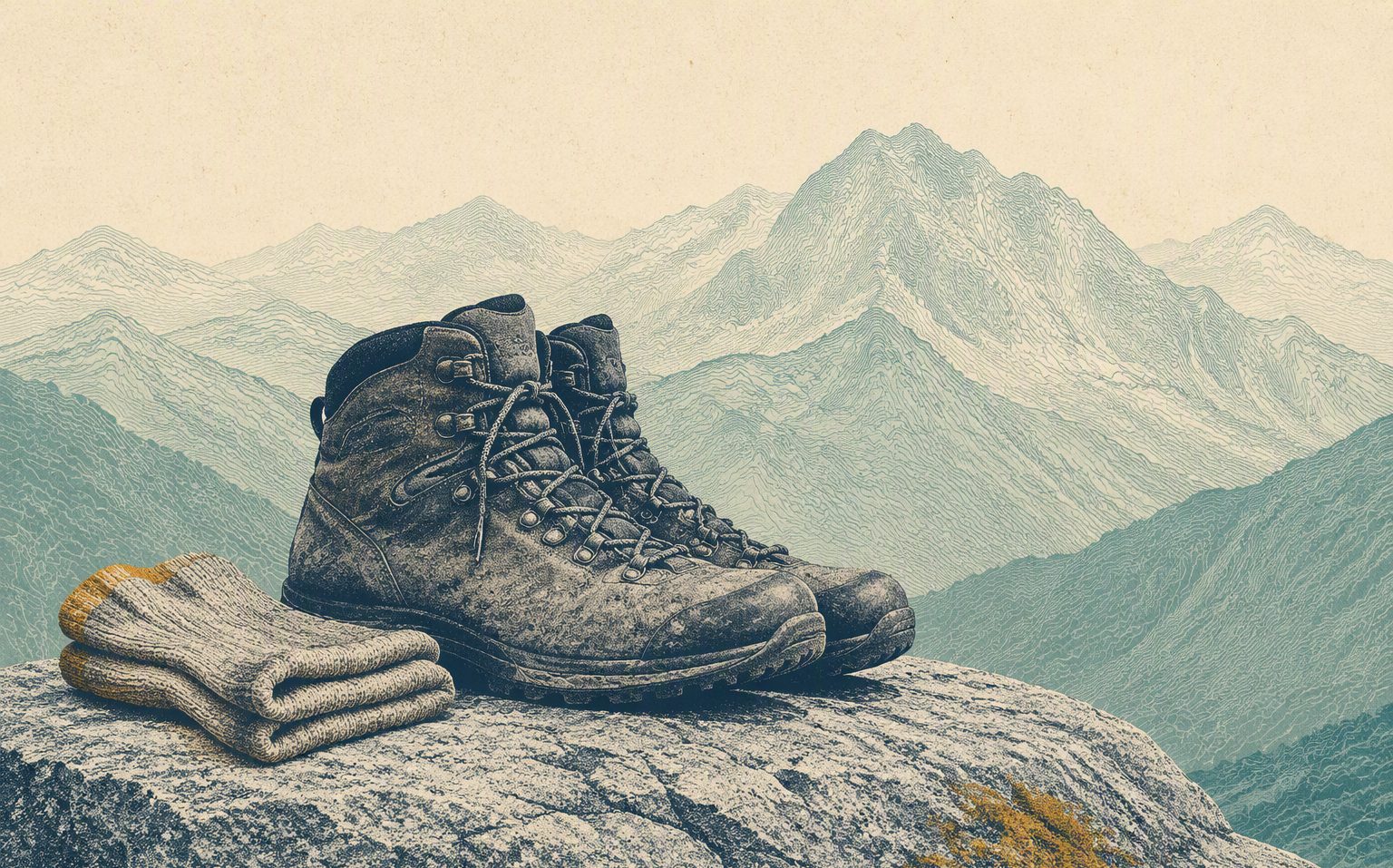
Field brief — the short answer
Choose boots that hold your heel firmly, secure the foot, and leave a little extra room at the toes. [1]
Fit for the terrain you hike
Choose hiking footwear for the terrain and conditions you expect to encounter, not just its first impression indoors. [1]
Hikers should know their limits and stay on designated trails as part of a safe route plan. [2]
Test the complete setup
Try boots with the socks you plan to wear so you can judge comfort and control together. [1]
Plan for weather changes and carry the equipment appropriate to your route before committing to a hike. [2]
Where to compare
Retailer options with a clear use case.
Affiliate disclosure. We may earn a commission if a retailer link becomes an approved affiliate link. That never changes the editorial criteria on this page.
Retailer option
Low-cut hiking shoe
Fast day hikes on established trailSee retailer optionsRetailer option
Mid hiking boot
Uneven ground and heavier carriesSee retailer optionsSources
Verified June 22, 2026
- Hiking Boots — American Hiking Society; accessed 2026-07-29
- Hiking Safety — U.S. National Park Service; accessed 2026-07-29
Common questions
Common questions
The details people ask before they go.
Who is this hiking guide for?
It is for readers who want to make a clear hiking decision before a real outing, not collect gear for its own sake.
What should I check before I buy?
Match the option to the conditions, trip duration, fit, and the other items it must work alongside. Read a retailer's current specifications before purchasing.
Are the retailer links recommendations?
They are starting points for comparing current options. We do not claim testing, price, or stock information we cannot verify.
Related notes